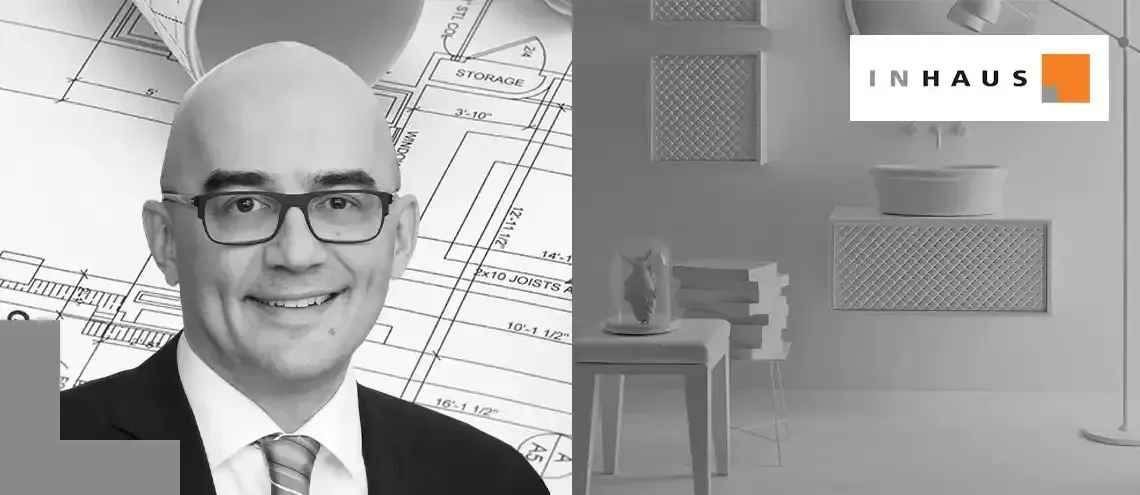
INFOLOX:Mr Wehinger, you have been working in the HVAC industry for over two decades. How do you see the industry developing in terms of digitalisation in recent years?
Wehinger: The HVAC industry itself is certainly not a pioneer in the move towards digitalisation, but it is also inevitable and omnipresent in our HVAC industry. Of course, there are also significant differences in the approach to the digitalisation of processes within our industry, and relatively small players like us have to make sure we don't get left behind! However, I can proudly say that we at INHAUS recognised early on that, as a retailer, the digitalisation of marketing, purchasing and sales processes is a top priority for us.
INFOLOX: Where do you see the biggest challenges for medium-sized companies in the next 2-3 years, especially for the HVAC industry?
Wehinger: The main problem is certainly the issue of resources – i.e. attracting bright minds and partners who understand digitalisation from the perspective of manufacturers and retailers. At INHAUS, we cannot achieve this alone due to our size, but we are tackling the issue together in our purchasing association. We began investing heavily in digitalisation many years ago, and together with our partners, we understand the quality of product data and master data, including the associated processes, to be one of the most important parameters in the cooperation between manufacturers and retailers!
INFOLOX: How is digitalisation implemented at INHAUS?
Wehinger: Actually, our entire company and therefore all employees and partners are involved in the topic of digitalisation. However, I would like to emphasise the topic of supplier evaluation and the corresponding parameters for digitalisation in this area. We attach great importance to this.
INFOLOX: You just mentioned supplier evaluation. To what extent do data, processes, integrations and their quality play a role in this?
Wehinger:Our suppliers and partners are evaluated according to clearly defined and transparent criteria. Whereas in the past the focus was on the product and the price or margin, today the focus is clearly on the quality of the data (texts, images, data sheets, master data, etc.) provided to us by the manufacturer. Both new and existing suppliers are continuously evaluated and classified accordingly, with data quality being the most important factor.
INFOLOX:You mention high-quality product data as a decisive factor in your collaboration with manufacturers. How does the evaluation affect this collaboration?
Wehinger: The current quality of product data and its optimisation is always an important point in annual and quarterly meetings. And in principle, it's quite simple, because good data must be rewarded directly. This means that instead of negotiating discounts or percentage points of the purchase price in the annual meeting, we discuss how we can improve the quality of product data from 85% to 100%. Because good data has a direct impact on sales and profits!
INFOLOX: Would you describe high-quality product data as the new gold of digitalisation in retail?
Wehinger: As retailers, we naturally depend on our manufacturers to do the groundwork perfectly, and data quality is one of, if not the most important parameter in this groundwork. Of course, we also have our own team for enriching/optimising the data with INHAUS-specific requirements. So there is definitely some truth in the metaphor. I think the return on investment in terms of time and money will bring us a higher return than gold in the medium term :-).
INFOLOX: Mr Wehinger, thank you very much for talking to us and we wish you continued success!