Why are we launching B2B customer portals using AI-based rapid prototyping?
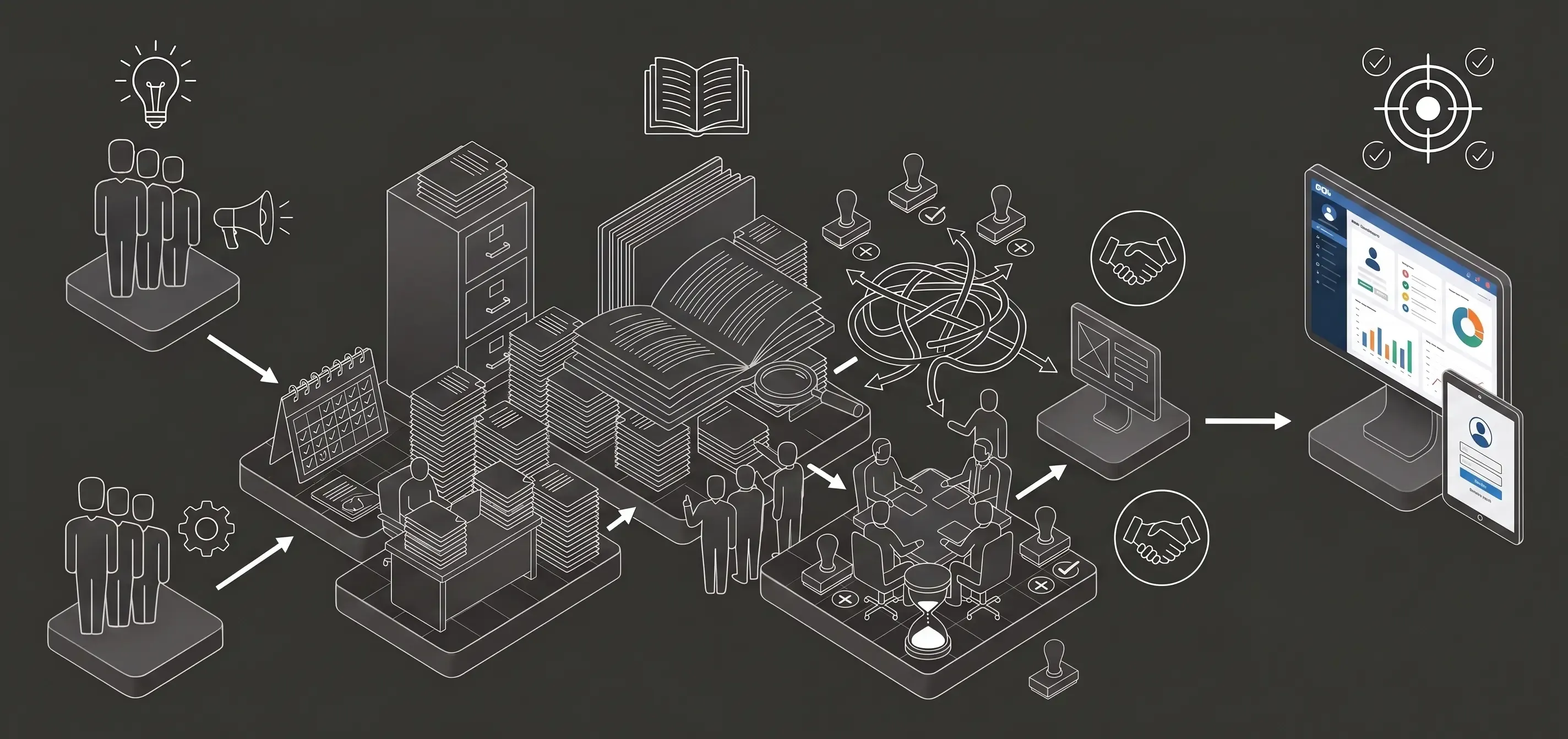
The risk involved is considerable: it is only after a significant investment has been made that it becomes apparent that processes are unsuitable, the user interface is unsatisfactory, or key requirements have been misinterpreted.
We are deliberately taking a different approach.
Before we write any production-ready backend code, we validate the idea itself – using AI-powered rapid prototyping.
The classic mistake in B2B platform projects
B2B portals are complex. They often combine:
- customer-specific processes
- role-based user logic
- ERP, PIM, DAM and CRM integrations
- business-critical workflows
Nevertheless, their design is often heavily text-driven. Yet even the best design document cannot answer one key question: How does the portal feel in the day-to-day reality of work?
That’s exactly where we come in!
What does rapid prototyping mean for B2B customer portals?
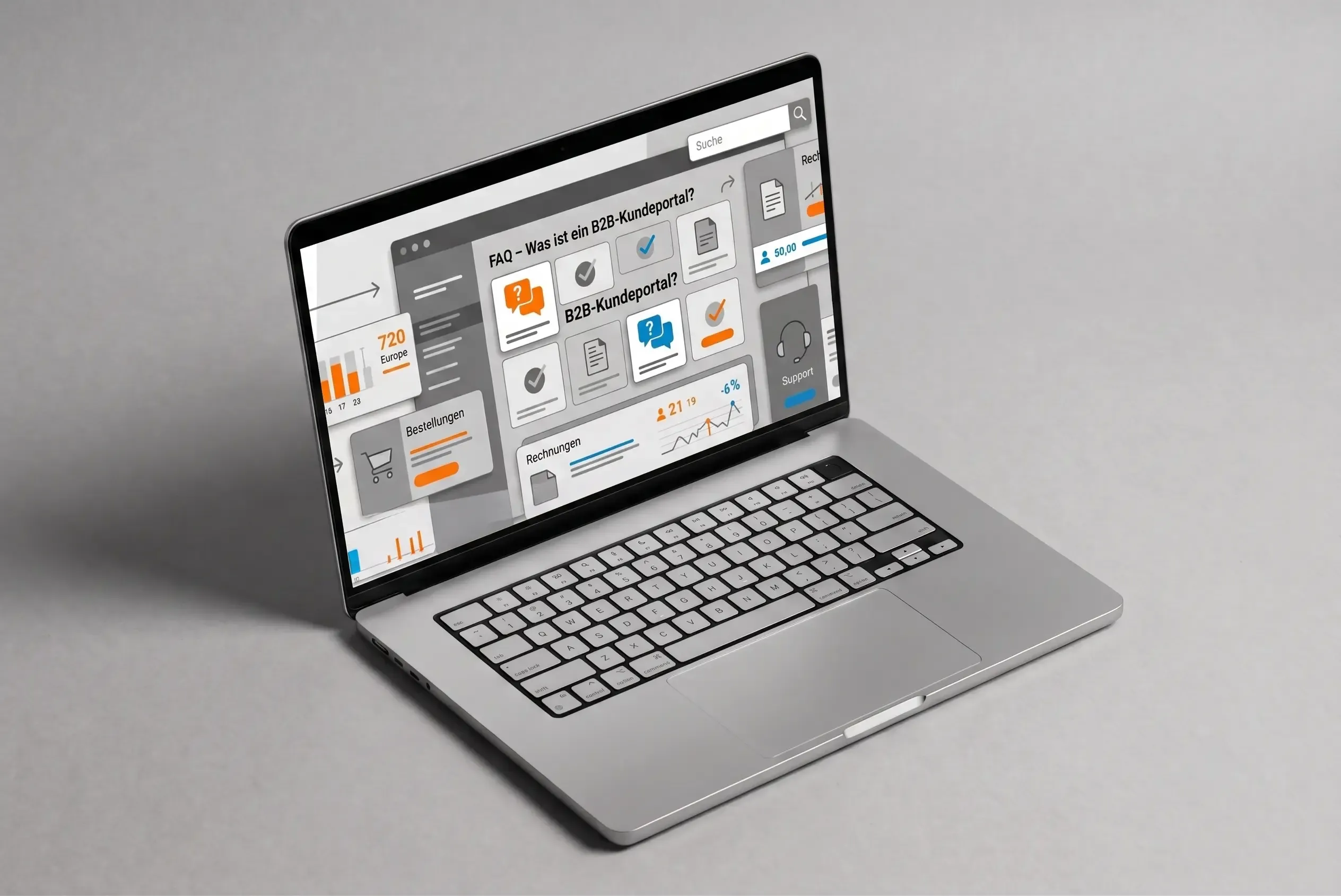
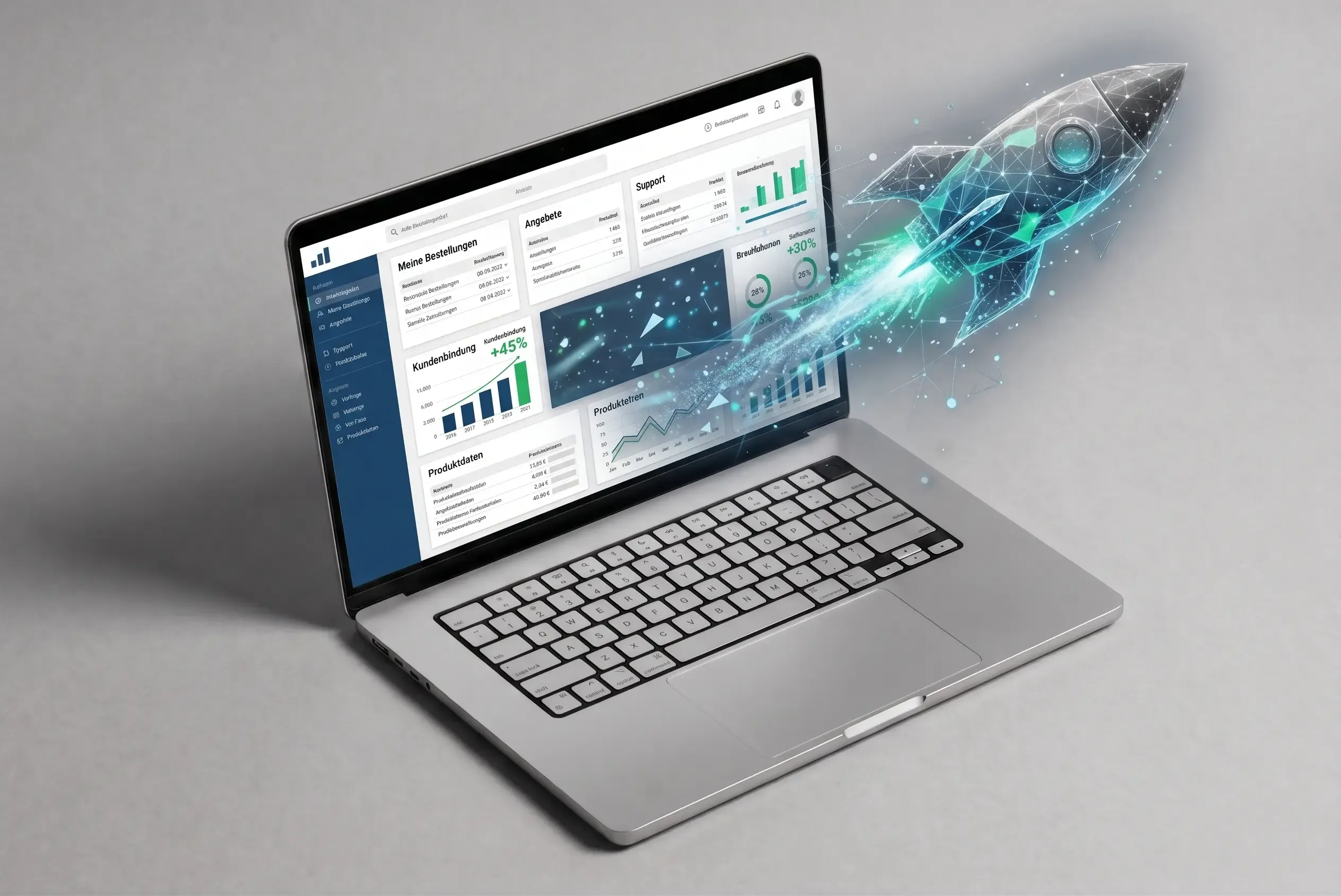
Instead of static slides or theoretical wireframes, we develop a clickable high-fidelity prototype (click dummy) within a few days.
This prototype runs directly in the browser and looks just like the final product. Users can experience, test and evaluate it as if it were the real thing.
The prototype includes, amongst other things:
- Realistic UI/UX design
- Functional navigation and page structure
- Illustrated end-to-end workflows
- (e.g. ‘Create order from PDF’, complaints processes, approvals)
- Interactive forms, dashboards and status indicators
Important:
Under the bonnet, the prototype is deliberately ‘empty’.
There are currently no databases, no complex security architecture and no production integration.
We simulate the applicationto bring it to life – not to finalise it from a technical perspective.
Why this approach is crucial for B2B projects
1. Experience rather than guess – minimising risk as much as possible
A detailed technical concept remains theoretical.
An interactive prototype is understood.
Stakeholders, specialist departments, sales – and, above all, real customers – can test the portal at an early stage.
Feedback is incorporated directly into the architecture, user experience and processes before costly core development begins.
This reduces:
- Misconceptions
- subsequent change requests
- Improvements to the implementation
2. Extreme speed and genuine validation
Ideas evolve. Requirements change.
Changes can be made immediately in the prototype:
- Change button placement
- Add or remove process steps
- try out alternative workflows
This is how we validate the product concept in a very short space of time – without creating any technical legacy issues.
3. The prototype as the perfect specification
Once approved by all parties involved, the prototype becomes the definitive blueprint for development.
For our developers, this means:
- No room for interpretation
- A clear understanding of each function
- Clear user journeys
The prototype replaces traditional requirements specifications with an interactive, visual specification.
Building on this, a scalable, secure and future-proof architecture is then created – for example, using modern monorepos and MACH principles.
Conclusion: Build the right thing first – then build it properly
With our AI-based rapid prototyping approach, we deliberately separate two phases:
- Validation of the idea
- Scaling the technology
This saves time, money and, above all, prevents things going wrong.
And it ensures that your B2B customer portal delivers real added value from day one – for users, business departments and IT alike.
Would you like to find out more about our AI prototyping approach? Give us a try!