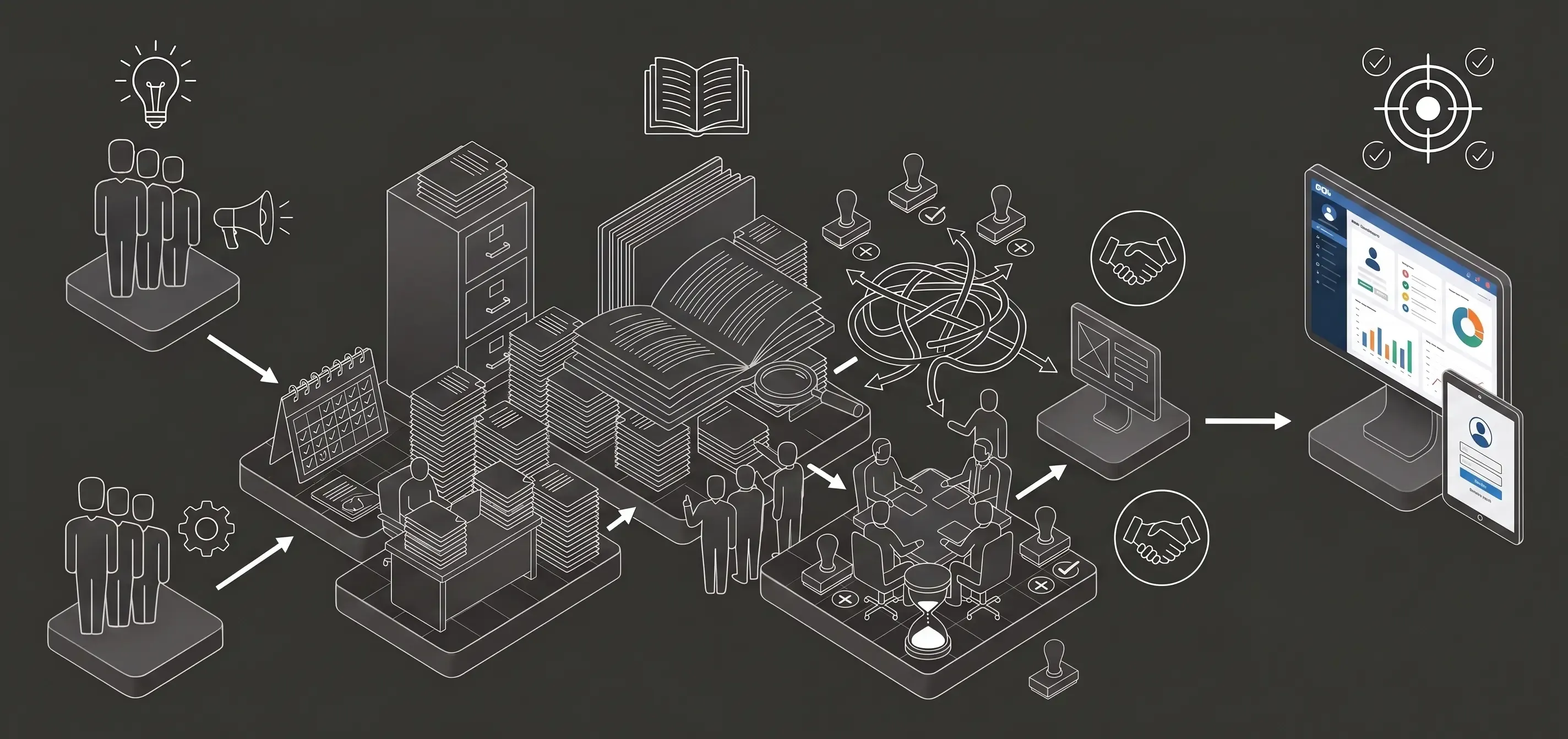
From "catalogues at the touch of a button" to a holistic, integrative approach to digitalisation – over the past 20 years, the business world of industry and technical trade has also undergone fundamental changes. As in all other sectors, it all began with isolated functions, tasks and processes that were gradually taken over by technology. In some areas of business, digitalisation was just getting started when elsewhere, processes were already being revamped, bundled and automated. This resulted in highly complex and heterogeneous system clusters, some of which were interconnected and some of which functioned completely independently.
Congratulations on 20 years of PIM! Tell us how it all began.
"When I entered the field of PIM/MAM and print publishing over 20 years ago, the term PIM (Product Information Management) did not yet exist. At that time, there was rather a proliferation of different systems for CMP (Cross Media Publishing) or DBP (Database Publishing). However, some customers and providers already recognised the potential that these systems had to offer beyond simply producing print catalogues. In our projects, we therefore usually referred to the PIM system as an MPDB (media-neutral product database). Driven by a number of manufacturers and consultants, the term PIM system or PIMS for Product Information Management System then became established.
Nowadays, some providers also refer to their systems as MDM systems, whereby the abbreviation stands for both Master Data Management and Multi Domain Management. The term MDM was coined by SAP because they wanted to differentiate themselves from PIM and suggest that MDM can be used to model not only products but also other objects.
Between us: Of course, this is also possible with any good PIM system, since a product itself is only one type of object, which in turn consists of freely definable structures, relationships, attributes, images, texts and so on! Since Gartner, for example, does not offer a Magic Quadrant for PIM, but only for MDM, every PIM is now also called MDM and vice versa. That's just a brief overview of the development of the terminology.
But it all certainly started with the topic of "catalogues at the touch of a button". That means that 20 years ago, a project always involved the automated creation of a more or less complex (we tended to specialise in the complex ones) and multilingual product catalogue in Quark Xpress, Adobe Framemaker or InDesign (which came later) from a media-neutral product database. Since there was no market category for databases yet, this could also be an extended ERP system, a converted PDM system or the first editorial systems for catalogues, mostly built by printing companies."
What are the requirements today and how do you position yourselves in this regard?
"Print catalogues, data sheets and price lists still play an important role today, but online topics such as websites, including online catalogues or online shops, and, where applicable, various other data formats for supplying other channels such as marketplaces, have become much more important. As a result, the topic of omnichannel – as the maximum expression of multichannel – is the focus of every consultation, selection, introduction and implementation of PIM and MAM systems, and the golden record, i.e. the total amount of all relevant data, images, texts and documents, is made available for all channels on the online platform. Not all elements have to be public; closed areas that address only specific target groups are also possible.
The most important thing is to pursue an online-first strategy. This means that everything that is communicated is made available in full, for all target groups and updated daily on the online platform. For this reason, we believe that it is not possible to provide meaningful advice on or select PIM and MAM systems without keeping a close eye on the structure, functionality and content of the online platform. It does not matter whether this platform is geared towards e-commerce or e-business.
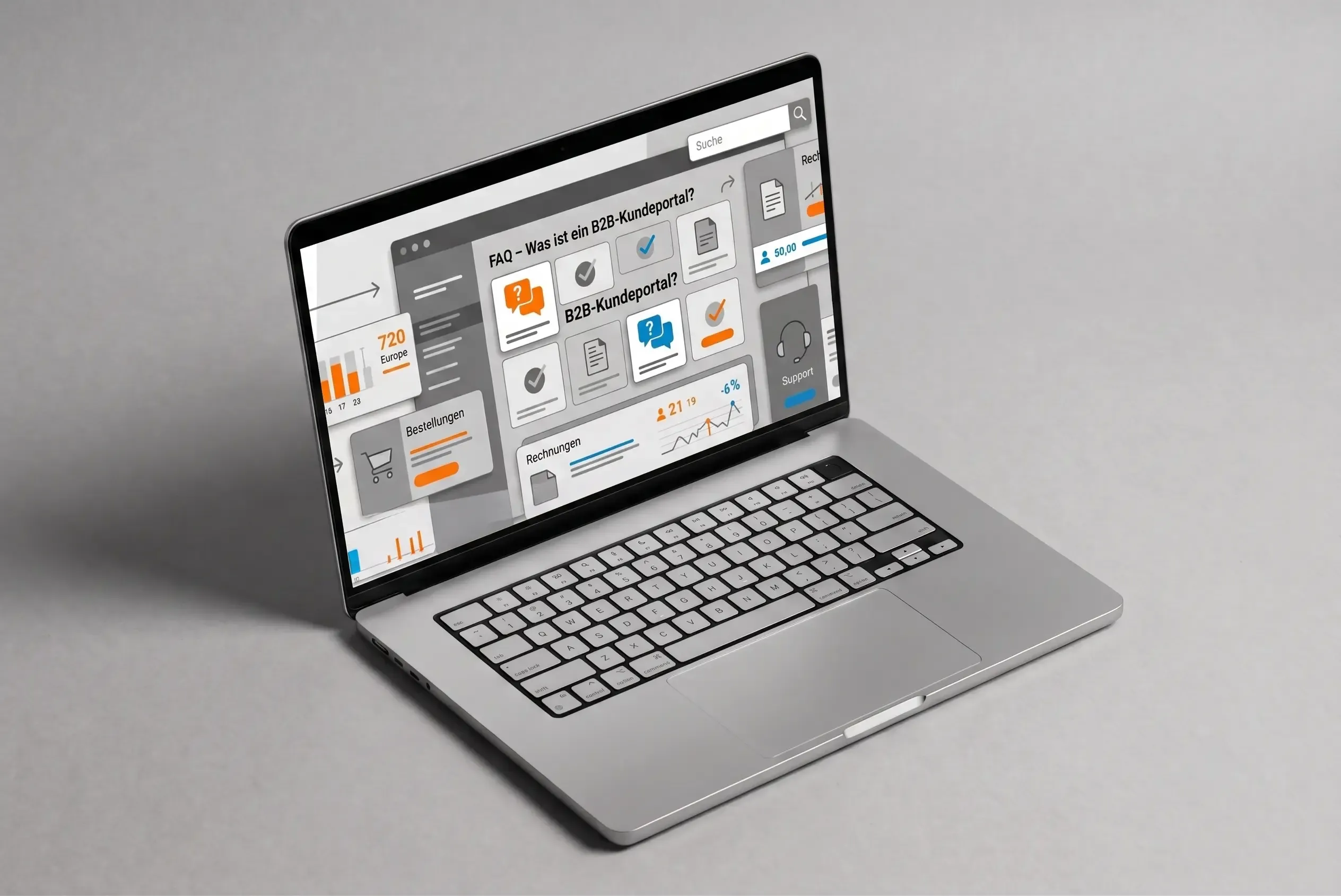
This is precisely the focus we specialise in: the integrative connection of PIM or MAM systems with the CMS or shop for a holistic e-commerce solution. Or, in the case of e-business, the design and implementation of omnichannel multi-system solutions consisting of the backend (PIM and/or MAM) and B2B content and commerce platforms in the frontend."
The focus of digitalisation depends largely on the business purpose of the companies. Which industries are you involved in and what challenges do companies face there?
"Our core competence lies in industry and technical trade – this is where we gained a foothold twenty years ago with our first customers, SICK AG, Buderus Heiztechnik, Honeywell and RÖFIX AG. The particular challenge in this area lies in the complexity of the products – on average, they comprise a hundred or more attributes, images, text modules, technical data and relationships in five to 30 languages and with dozens of outputs for print, online, mobile and exchange formats.
It is precisely this complexity that excites me, but also the heterogeneity of the target groups and thus the many different use cases, processes and systems – that's what makes this market so exciting for me. Enough others are already taking care of socks, T-shirts, sporting goods and other consumer goods!"
While you mention target groups, how have customer expectations changed over the years? How
do potential and existing customers want to be addressed today?
"Whereas in the past it was perfectly acceptable to provide a single print catalogue for all target groups once a year, today's customers and prospects expect target group-specific or even personalised and up-to-date information on the website. In addition to static and comprehensive information, the processes of planning, selection, ordering, maintenance and servicing for all products on the online platform must also be supported as effectively as possible in dozens of languages with tools and services. Download centres, seminars, webinars, product finders, product configurators, enquiry and planning tools, live chat and appointment scheduling are now standard in the B2B sector.
Customers and prospects see the online platform as an advisor, salesperson and process supporter – 24/7. In principle, the online platform must be understood as artificial intelligence in the form of an omniscient sales representative."
What are the consequences for PIM, MAM, MDM and distribution channels?
"Software manufacturers across all disciplines must learn that they are not the centre of the universe, but merely an important component in an overall integration solution, and increasingly focus on interaction with other software products in the cloud. The API-based headless approach must be understood and implemented as a basic architecture – only then can software be optimally designed for interaction with other systems."
What is the best place for companies to start when tackling omnichannel and e-commerce?
"The very first and most important step is to completely detach yourself mentally from the existing architecture, data and current processes and to think freely about what the company's strategy actually is. What products and services are available? Which ones should be added in the future? Who are my customers and which target groups should be addressed next?
Only once your own corporate strategy is in place will it be clear how the digital framework conditions should be set, and then you can start thinking about which systems are suitable and what the processes and integrations should look like. Decision-makers still too often make the mistake of letting technology dictate their business. But it should be the other way around!"
How have marketing and sales practices changed?
"We divide the entire topic of marketing and sales digitalisation into compulsory and optional elements. Unfortunately, many companies are still stuck in the compulsory phase and are only just laying the foundations for managing their data and content with PIM and MAM. However, many processes and channels are still being updated semi-automatically in recurring projects with a great deal of effort, and this time is missing for the optional part. The optional part is about responding even more individually and in a more up-to-date manner to the processes of the target groups and sales and supporting them in the best possible way. Sales and marketing employees need a platform, or cockpit, to do their job in the best possible way. This is what we focus on with our customers after the initial setup of the platform, once the basics – i.e. the print catalogue, price lists, data sheets, website, online catalogue, shop and so on – have been taken care of."
What are the most important trends and developments in B2B omnichannel marketing today?
"We have noticed that in-house sales departments are often overlooked when it comes to digitalisation. Employees still write visit reports and quotations by hand, which are then typed up by office staff.
Providing sales staff with digital support that is just as good as or even better than that provided to buyers is certainly an important trend. Solving problems rather than selling products is also becoming increasingly important in the digital world. Guided selling, configurators and comprehensive process support, from project planning and the design of 1-x products and systems tailored to the task at hand to real-time communication via chat and video conferencing via the online platform, are certainly the most important trends for 2021."
The interview with Alexander Pircher was conducted by Matthias Kant.
As co-founder and CEO of several consulting firms, Matthias Kant advises companies on their information supply chain management and supports and accompanies them in digitisation projects. He is also managing director of Deutsche Stadtmarketing Gesellschaft in Krefeld, which specialises in government funding for digitalisation initiatives. Previously, Kant was CEO of PIM and CMS manufacturer pirobase imperia gmbh, as well as a partner and board member for management consultancies Droege and KMC Management Consultants.
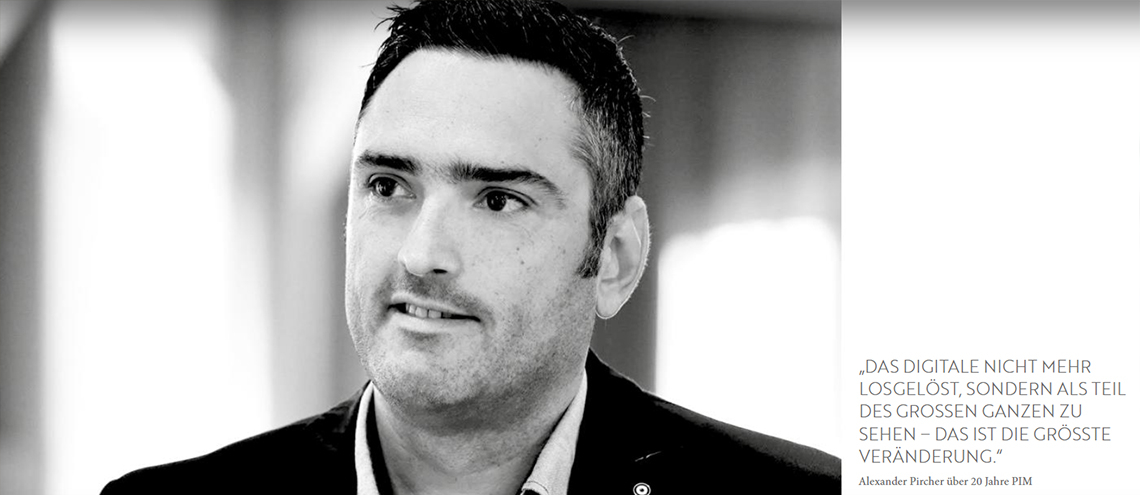
No longer viewing digital as something separate, but rather as part of the bigger picture – that is the major change that Alexander Pircher, founder and managing director of INFOLOX GmbH, has observed and accompanied over the last 20 years in the product information management (PIM) market.