There are many different approaches, procedures and methods for designing, introducing and implementing a PIM system. In this article, we present the key cornerstones of our method.
Over the past 15 years, we at INFOLOX have developed an efficient and pragmatic solution that we have advised and implemented at a large number of medium-sized and large companies. Here we present the most important cornerstones of this method.
Backend4Frontend
The output-driven Golden Record
The goal of every successful PIM implementation is to be able to flexibly serve all media, channels and publications with the information, data and media of all products. This requires a master data set that can be used across the board as a "golden record". On the one hand, this golden record contains all the information, data and media of all products in all their forms, and on the other hand, all publications for all channels can draw on the golden record.
We create the Golden Record based on the most important outputs/publications (print, online, mobile, special formats) and as examples for the most important objects. We understand the Golden Record to be the smallest common multiple of all data, metadata, texts, images and documents that fully describe these objects for all channels, publications and target groups.
The Golden Record manifests itself in the "master data sheet"
To ensure that the Golden Record does not remain a theoretical model, we pour it into a mostly internal master data sheet. This master data sheet contains all data, images and texts in a form optimised for approval, translation and further applications. This means that everything that would otherwise be spread across many publications, channels and documents is manifested in a data sheet that is readable and clear for product managers, marketing experts and translators. On this basis, the PIM configuration and publication processes are created – supplemented, of course, by other aspects such as relationships, groupings and application information.
Master data sheet as the linchpin of all processes
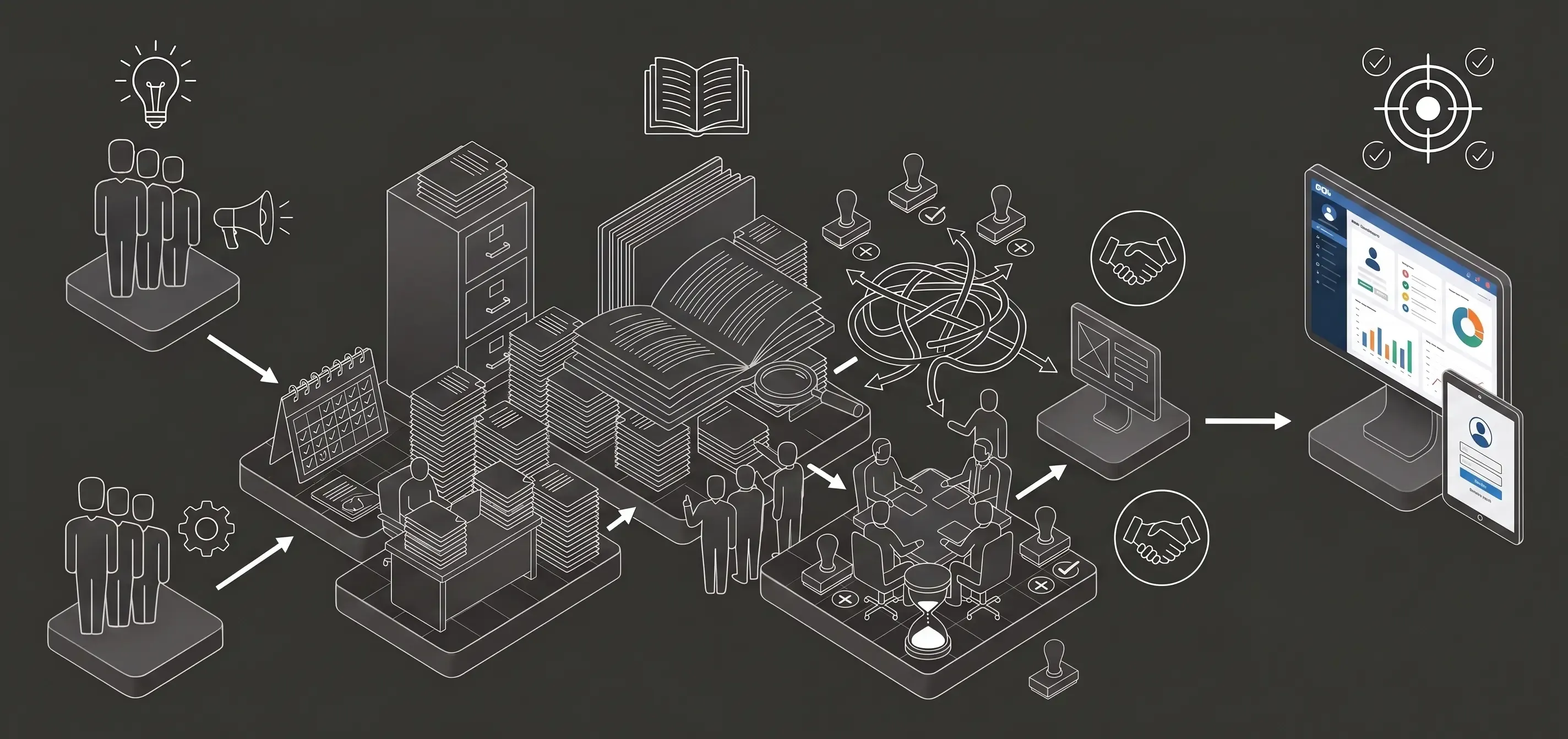
It is particularly important to note that this approach to PIM implementation can only be fully realised if the internal processes of data entry, checking, approval, translation and publication are also completely reorganised. From a publication-centred approach to a master data sheet-centred approach. This means that individual catalogues, brochures, websites and shops no longer need to be checked and approved. Instead, only the master data sheet is checked and approved after changes, additions or new entries have been made. This means that all publications and outputs are approved in a single step, as long as they consist of content that complies with the golden record. The master data sheet in the approved version is therefore also the basis for the translation or localisation of content.
What sounds simple in principle involves a considerable amount of change management in practice. This is because obtaining the golden record as the lowest common multiple requires appropriate coordination. This should not be underestimated.
All too often, product managers, marketing managers and marketing services have been accustomed for years to having individually designed publications created page by page – either by a media service provider or internally. This did not require any overarching coordination – neither in terms of data, processes nor publications. The creation process was correspondingly time-consuming and slow, without the possibility of multiple use. This approach now needs to be turned around 180 degrees, with all products and publications being coordinated at the "master data sheet" level.
Appropriate change management is necessary here: on the one hand, to convince all parties involved of the advantages of the master data sheet-centred approach and, on the other hand, to successfully organise the conversion process itself. Depending on the product portfolio and its breadth, depth and uniformity, this can be a very demanding task. Without the relevant experience, it is easy to reach dead ends or fail due to insufficient motivation or implementation quality. INFOLOX has successfully designed and actively supported such processes on numerous occasions.
And what does it achieve?
Ultimately, the master data sheet-centred approach to PIM implementation is the best prerequisite for any automation, multiple use and faceting in the publication of product information. This approach is the best way to achieve comprehensive, consistently target group-oriented benefits. New publications for other media, channels, target group segments or areas of application can be created very easily from product information prepared in this way. When applied consistently, this pragmatic and practical approach leads to a significant increase in process efficiency and a marked improvement in data quality. It also reduces the effort and costs involved in data entry, maintenance and translation, and massively minimises the turnaround time for product updates and product innovations.
At the same time, this approach also increases the demands on the infrastructure and process reliability in the PIM, MAM, CMS, and online shop environment. Where previously a website update was only necessary once a month or year, it is now often updated several times a day – and this must happen very quickly and flawlessly, even with large volumes of data. Interfaces to other systems, especially the ERP, simply need to be designed to be dynamic and performant. To meet the demands on the system landscape, the right software products and integration concepts are required. But at INFOLOX, we already have the right solution for SMEs in our portfolio: our integration approach and the Omnichannel-Box software solution for every PIM.