Currently, there seems to be only one topic of discussion: the Digital Product Passport. In panels, strategy papers and software presentations, it is celebrated as a major digital innovation. The tenor is often the same: digital product transparency is finally beginning.
I take a more nuanced view. Not because I think the Digital Product Passport is wrong – on the contrary. But because I believe that we in the industry are currently selling something as a revolution that has been standard practice for many companies (including us at INFOLOX) for over 15 years in the field of B2B portals with PIM, DAM, CMS, SHOP and print publishing.
Product information was never the problem – its availability was.
What is required today under the Digital Product Passport? A product should be clearly identifiable and provide access to up-to-date, consistent and context-related information at all times – from presales to use and service to recycling and disposal.
To be honest, it's less about new technology and more about an old insight: product information must be available where it is needed and properly prepared for the respective target group.
That was precisely our goal at INFOLOX over 15 years ago.
Up-to-date product information – tailored to specific target groups
Long before terms such as "digital product passport" or "product experience" became popular, it was a matter of course for us:
- All relevant presales information (marketing, product arguments, variants, documents, media)
- All necessary aftersales information (technology, service, spare parts, instructions, updates)
centrally managed and tailored to specific target groups – for sales, service, partners, technicians or end customers.
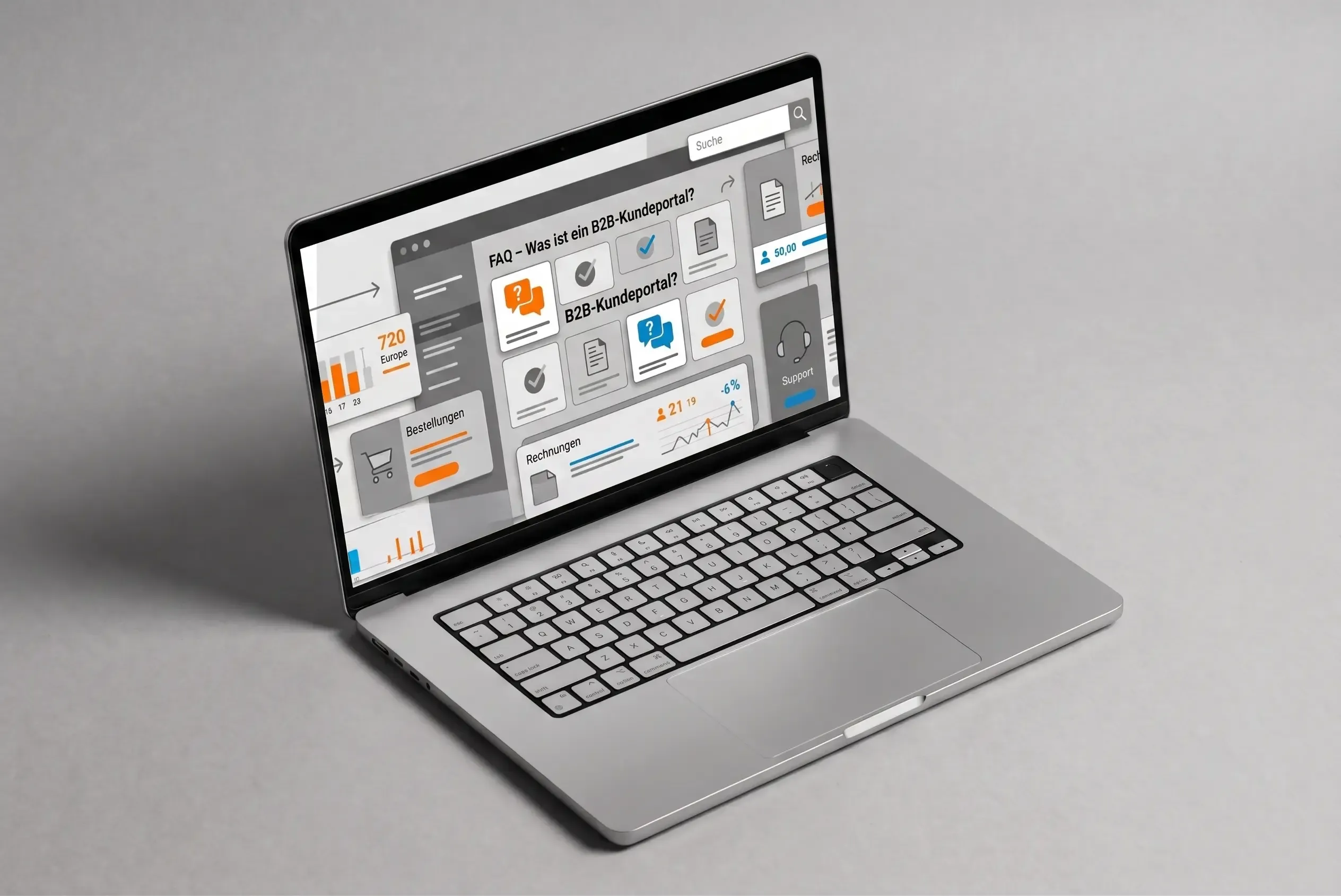
This information was not scattered across PDFs or static catalogues, but was made available on a daily basis in an online portal. Changes to product data took effect immediately – without reprints or media breaks.
Physical access: automatically generated QR codes with updatable URLs
The decisive step has always been the connection between the digital product world and the physical product and/or print publication.
That is why we decided early on to:
- every product,
- every item,
- every variant,
- and, if necessary, even every version number
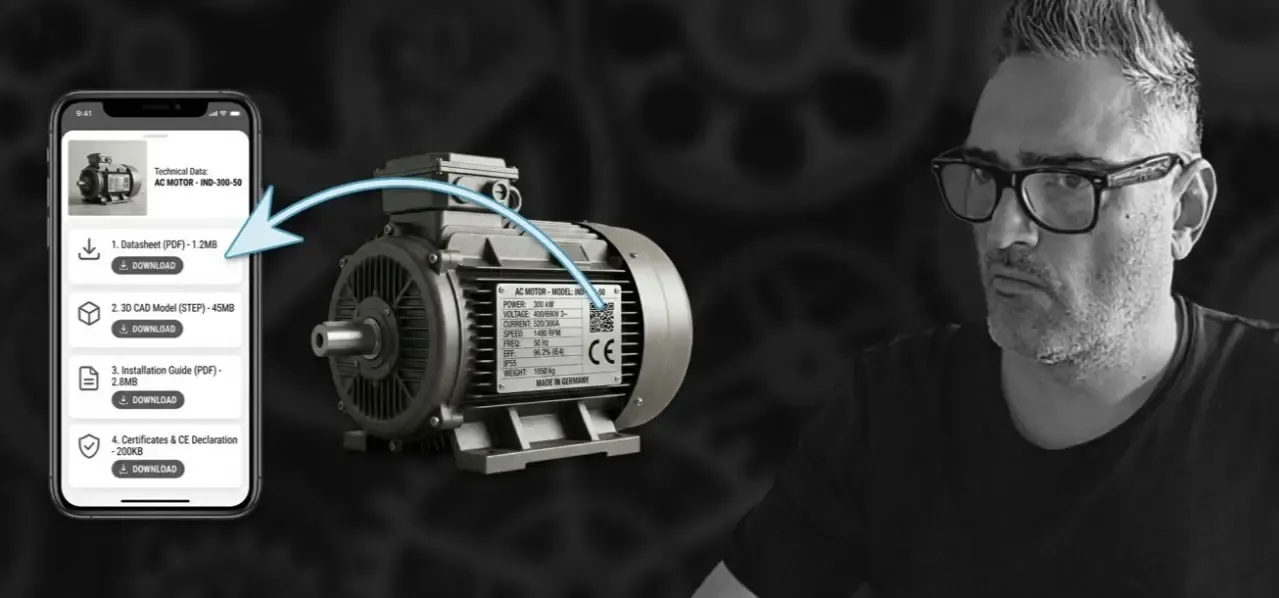
Automatically generated QR codes with variable links are used.
These QR codes do not refer to a fixed file, but to a unique database ID that points to a product landing page that is always up to date. All relevant content is presented there in a bundled form – structured, up to date and context-sensitive.
The code itself is permanently available on the product:
- on the label,
- on the type plate,
- in the accompanying documentation.
One scan is all it takes – and you have the right information. No detours. No update problems.
When I look at what is being discussed today under the Digital Product Passport, I deliberately ask a provocative question:
Don't many industrial companies already have a digital product passport – without calling it that?
At least technically and organisationally, these solutions have been fulfilling exactly what is now required by regulation for years:
- Unique product identification
- Up-to-date, centralised product information
- Versioning and lifecycle reference
- Direct link between product and digital product file
The difference lies less in the what? than in the why?: In the past, it was market and customer requirements. Today, regulatory requirements have been added to the mix.
The real bottleneck is not the QR code
What bothers me about the current discussion is the focus on visible elements – QR codes, labels, identifiers. All of these are technologically trivial.
The real challenge lies beneath:
- Clean product data models,
- consistent PIM, DAM and MDM structures,
- clearly defined responsibilities,
- and systems that not only store information but can also display it in a context-sensitive manner.
Those who have built this up over many years will not see the Digital Product Passport as a threat, but rather as a logical extension of existing architectures.
My conclusion
The Digital Product Passport is useful and necessary. But it is not a completely new concept. For many companies, it is a stress test for their own product data foundation. For others, it is simply formal recognition of what they have been doing for years. At INFOLOX, it has been standard practice for over 15 years to make product information centrally accessible, up to date, target group-specific and directly available on the product itself.
Perhaps we should therefore talk less about revolution – and more about who has already understood their product data.